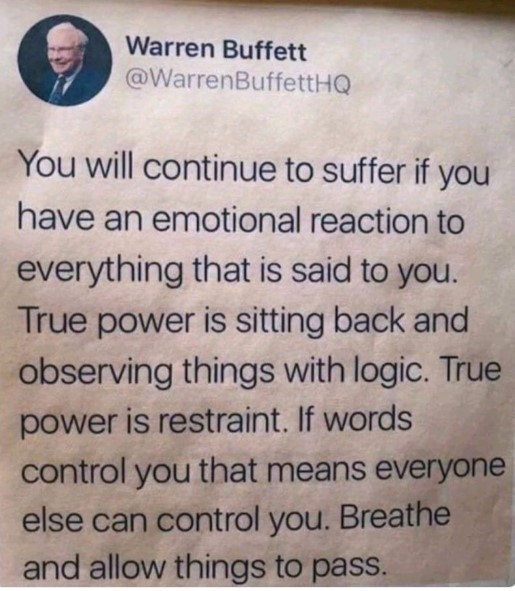
I’m not entirely sure Warren Buffet said this, but the message is powerful—and more importantly, it’s true.
Early in my career, while leading a training and development department for a national organization, I received feedback that stopped me in my tracks. My supervisor told me that I could come across as defensive when others offered criticism about my department.
At the time, that was difficult to hear.
I took immense pride in my team—their work, their impact, and the value we brought to the organization. From my perspective, we were doing exceptional work. So when someone criticized that work, my instinct was to defend it—and defend them.
That instinct came from a good place. But that doesn’t always make it effective.
Like most people, I’m emotional. And like most leaders, I’ve had moments where emotion influenced my response more than logic. The challenge is not eliminating emotion—it’s managing it.
That feedback forced me to pause and reflect. I thought through specific situations where I had been defensive and asked myself a hard question:
Was I truly listening—or just preparing to respond?
What I realized is this: defending your team and being open to feedback are not mutually exclusive. You can—and should—do both. But how you do it matters.
Over time, I’ve developed a simple approach to handling feedback more effectively:
1. Control the Emotion
Your first responsibility is to manage your reaction.
When emotions rise, listening stops. You may hear words, but you’re no longer processing meaning. Controlling your emotional response creates space to think clearly and respond intentionally rather than react impulsively.
2. Listen to Understand
This sounds simple, but it’s rarely practiced well.
Let the other person speak. Don’t interrupt. Don’t mentally rehearse your rebuttal while they’re talking. Focus on understanding their perspective—even if you don’t agree with it.
If they are emotional, let them be. Their emotion does not require your reaction.
Self-control in these moments is a form of strength.
3. Ask Questions for Clarity
Seek to fully understand the situation.
Ask thoughtful, clarifying questions:
- What specifically happened?
- When did it occur?
- Who was involved?
- What was the impact?
This does two things: it gives you better information, and it demonstrates that you are taking the feedback seriously. It also allows you to separate facts from assumptions.
4. Respond Thoughtfully
When someone provides feedback, they expect acknowledgment—and often, action.
A strong response doesn’t mean having all the answers immediately. It means being intentional in how you engage.
- Start with appreciation: “Thank you for bringing this to my attention.”
- If needed, create space: “I’d like to look into this further and follow up.”
- If appropriate, share next steps or a solution.
Even when feedback comes from a superior expecting answers, it’s reasonable—and often wise—to take time to evaluate before responding with a decision.
What About Positive Feedback?
Positive feedback deserves just as much attention.
Acknowledge it. Appreciate it. But also explore it.
Ask: “What specifically worked well?” or “What made that valuable for you?”
Understanding the “why” behind positive feedback helps you reinforce the behaviors worth repeating.
Final Thought
Controlling your emotions—especially in moments of criticism—is not natural for most of us. It’s a discipline. One that requires awareness, practice, and intention.
But it’s also a discipline that pays off.
When you manage your reactions, you elevate your leadership. You make better decisions. You build stronger relationships. And most importantly, you create space for growth—both for yourself and for those you lead.
Because real power isn’t in winning the moment. It’s in mastering yourself within it.
 Prime Learning & Development